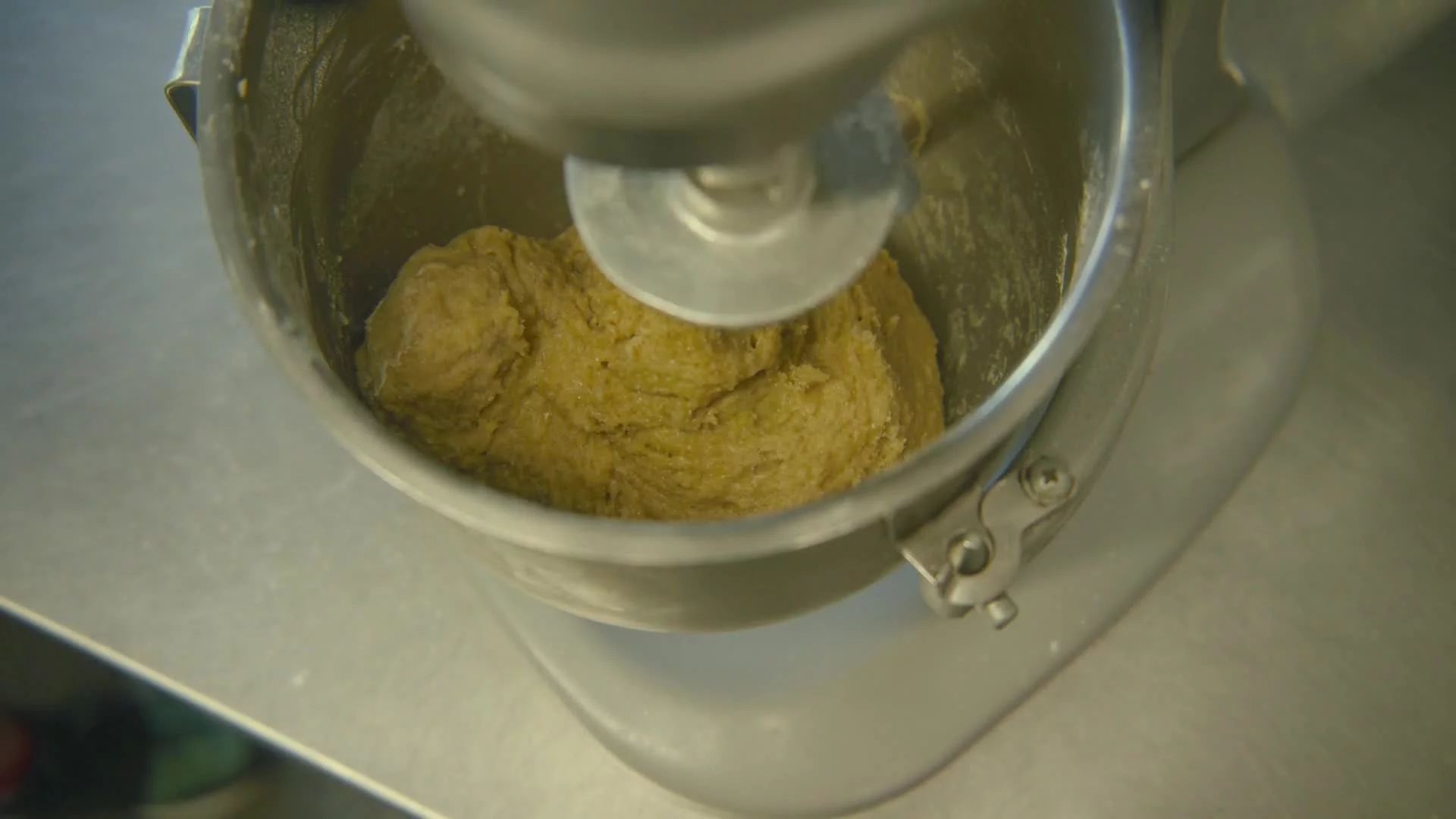
Add the salt and yeast and mix the dough again on medium speed for 5 to 8 minutes. The dough will start to move as one cohesive unit, balled up around the hook.
It will be ready for the butter when it’s very strong, showing good resistance when you try to pull a piece away from the mass. The gluten needs to be at maximum strength before you start adding all the fat from the butter.
Gradually mix the butter in, one-quarter of it (40g) at a time. After each addition, mix the dough until the butter is incorporated, then add the next 40g, and repeat until it all has been incorporated. You will have a silky, glossy, smooth dough.
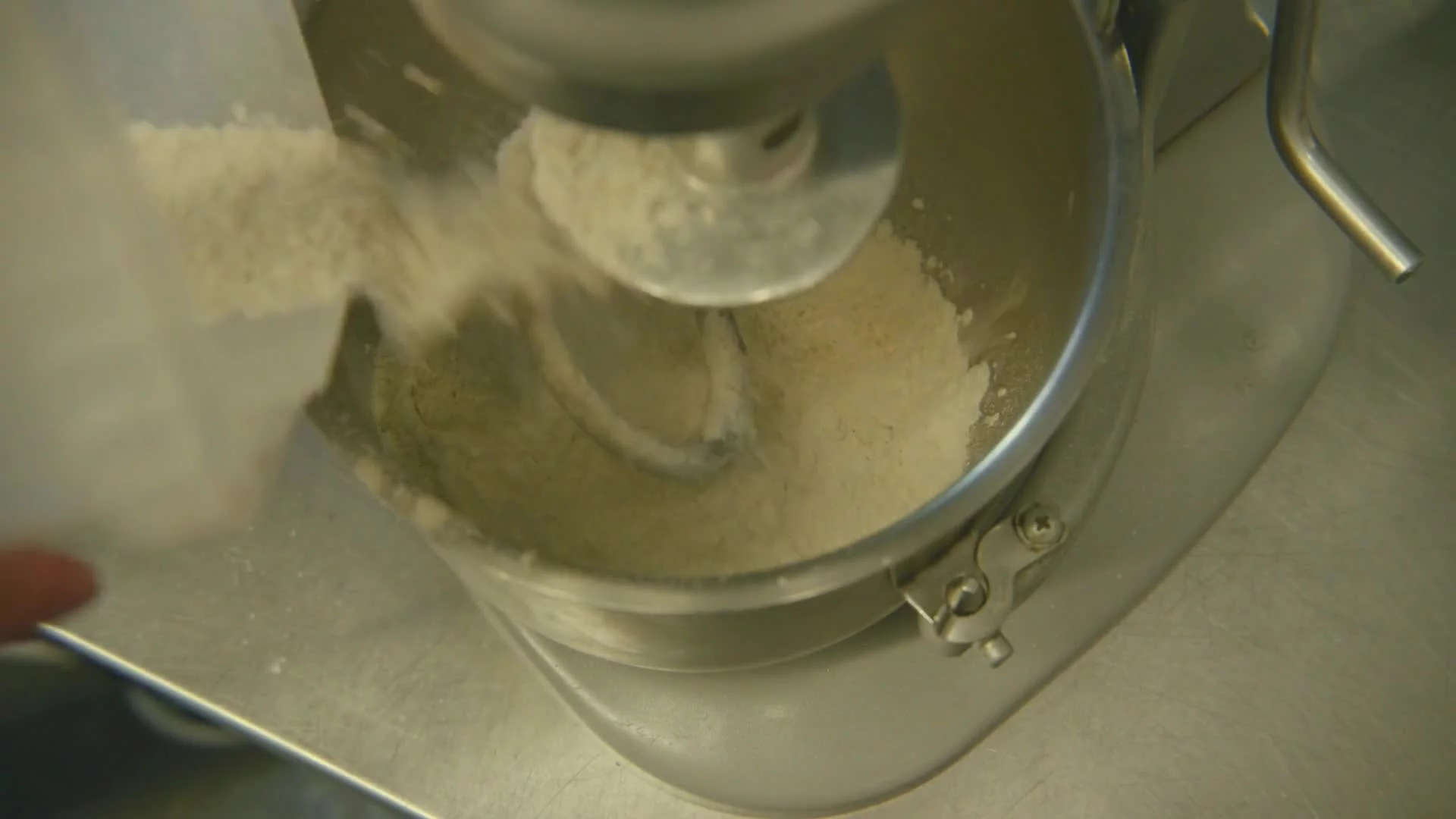
Once the starter is ready, in the bowl of a stand mixer fitted with the dough hook, combine both flours, the eggs, starter, scalded rye, water, sugar, and milk powder. Start the mixer on low speed and increase the speed to medium, mixing until the dough is smooth and cohesive, about 3 minutes.
Let the dough rest for 20 minutes.
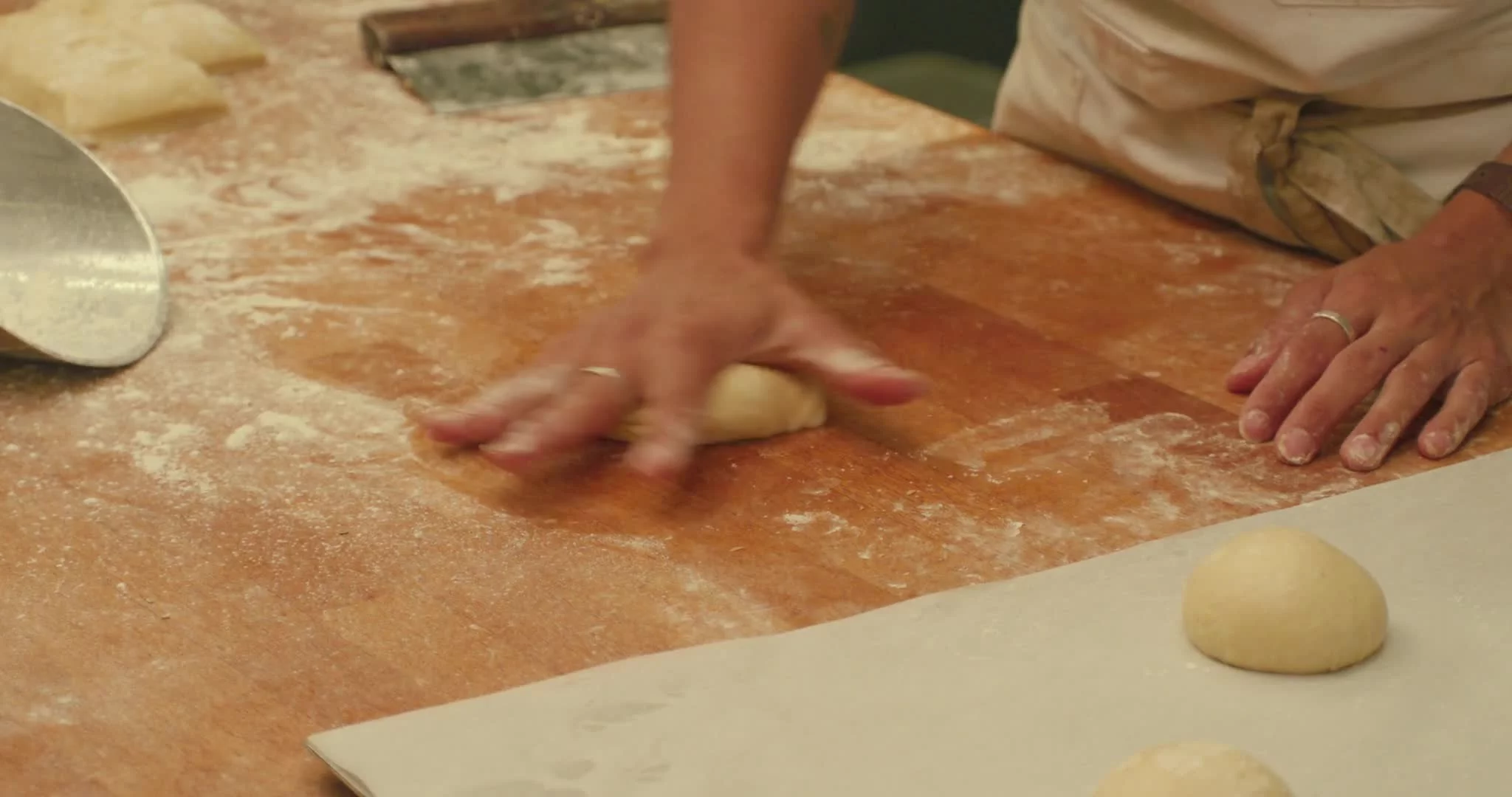
Cut the dough into 10 portions of 80g each. Roll each piece into a ball using the dough balling technique: Flour your dominant hand and tap off the excess. Get one portion of dough in front of you and apply light pressure to the top of the dough as you use your fingers and thumb to form a kind of circular basket around the dough.
Roll it in circles; the dough should be a bit sticky on the bottom as you’re pressing lightly on it while rolling; that friction and sticking on the work surface will help the dough come together in a ball. As you roll the dough, your fingers should be tucking the dough underneath itself to help form a ball. Roll until the dough has a nice, taut surface and a round shape. Repeat with the remaining dough pieces.
Space them evenly with ample room between them on a sheet pan lined with parchment paper or a silicone bakng mat. Let the buns proof in a warm place (75°–85°F / 23°–29°C) for at least 2 hours and up to 4 hours, until they have doubled in size and do not spring back when you poke a finger into the side of a bun.
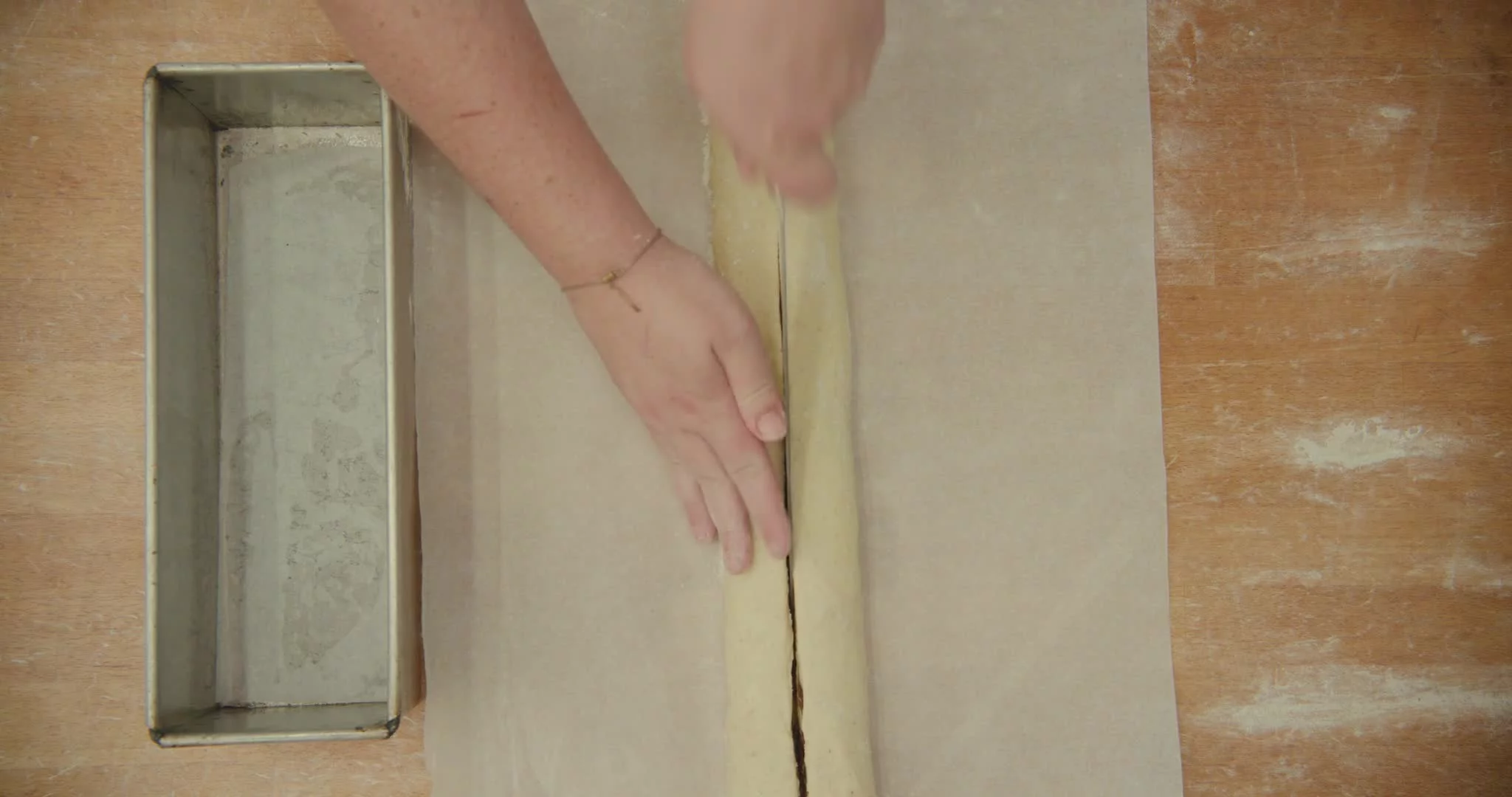
Butter the loaf pan. Remove the dough from the fridge and use a sharp knife to cut it decisively in half lengthwise. Twist the two halves of the dough around each other, tuck the ends underneath themselves, and lay the babka into the prepared pan.
Let it proof in a warm (75°–86°F / 24°–30°C) place for about 2 hours, until the babka has doubled in size and looks swollen.
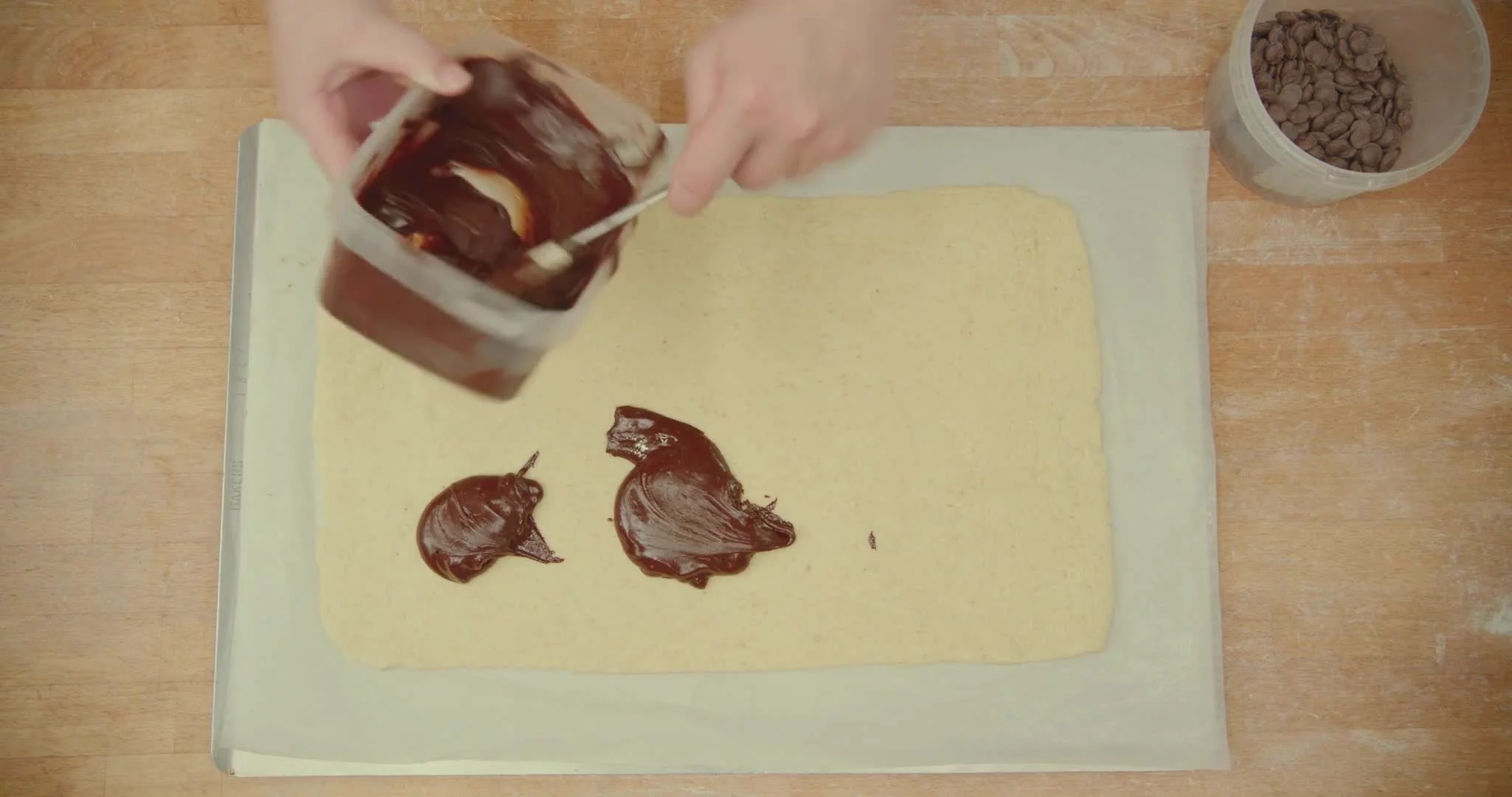
Turn the chilled dough out onto your work surface, gently punching it down to release the excess gases, and roll the dough out into a 12 × 8-inch / 30 × 20cm rectangle a scant ¼ inch / 5mm thick.
Spread your chosen filling in a thin layer over the surface of the dough and sprinkle the chocolate chips evenly over the filling. Roll the dough tightly into a log, making sure there are no pockets of air as you roll.
Chill the rolled dough for 1 hour in the fridge, loosely covered.