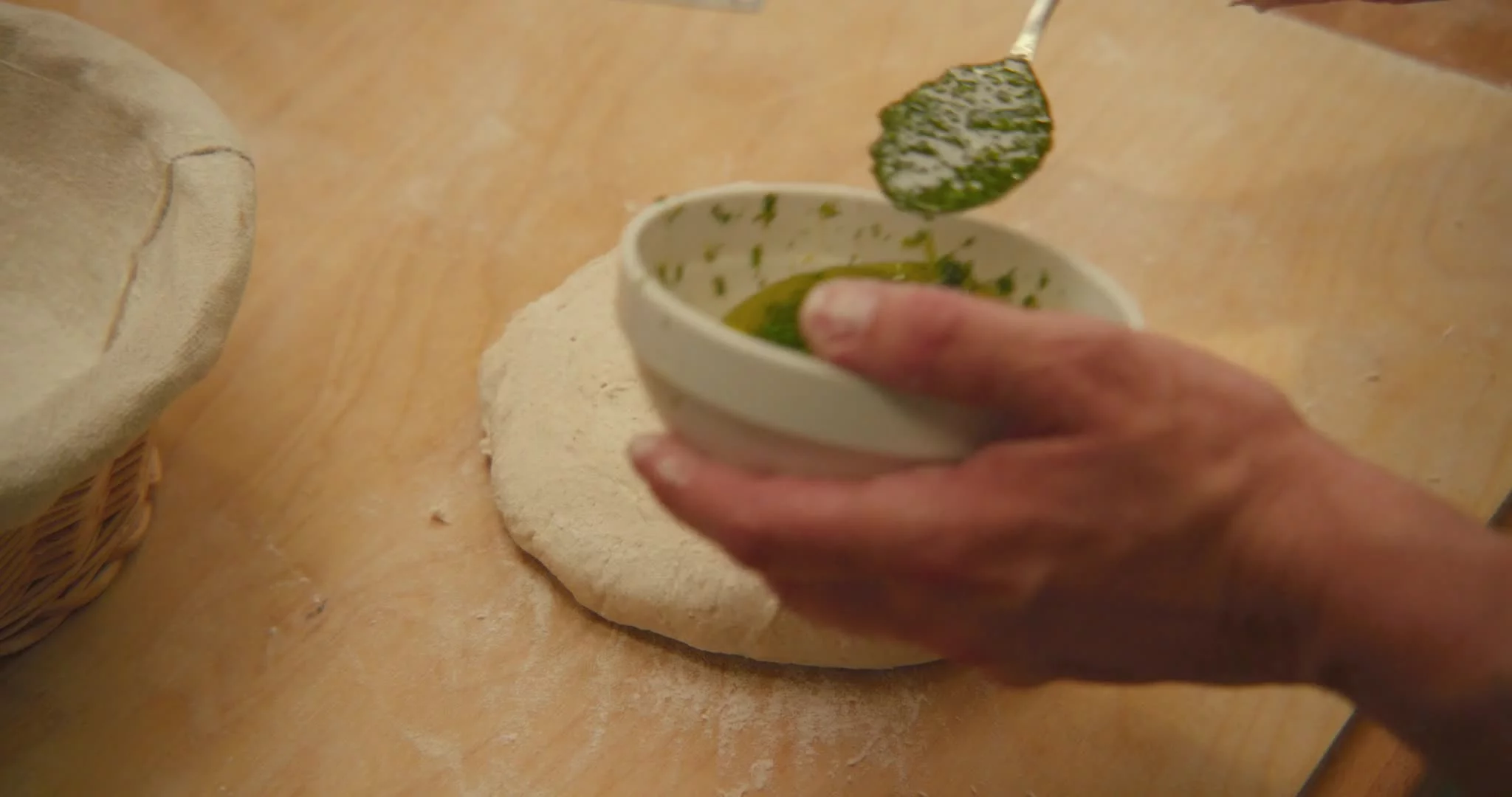
Use a bench scraper to get one loaf in front of you. Use a soup spoon to transfer about half of the rosemary lemon oil to the center of the dough’s surface. Quickly pull and gather all the edges of the loaf into one hand, rolling them together and pressing the edges to seal the oil in. Scrape or brush away any excess flour on the work surface; you want the dough to slightly stick to the surface for this next part. Turn the dough over so that the seam is now facing down.
Use your hands, cupped around either side of the loaf, to start gently shaping it back into a round, applying light pressure to both sides as you turn and shape the loaf, so that the oil on the bottom of the loaf gets shimmied up the center of the loaf, ending up visibly close to the surface. Once you can see the oil through the surface of the loaf, stop shaping. Use the bench scraper to invert the loaf into a floured proofing basket. Repeat with the other loaf.
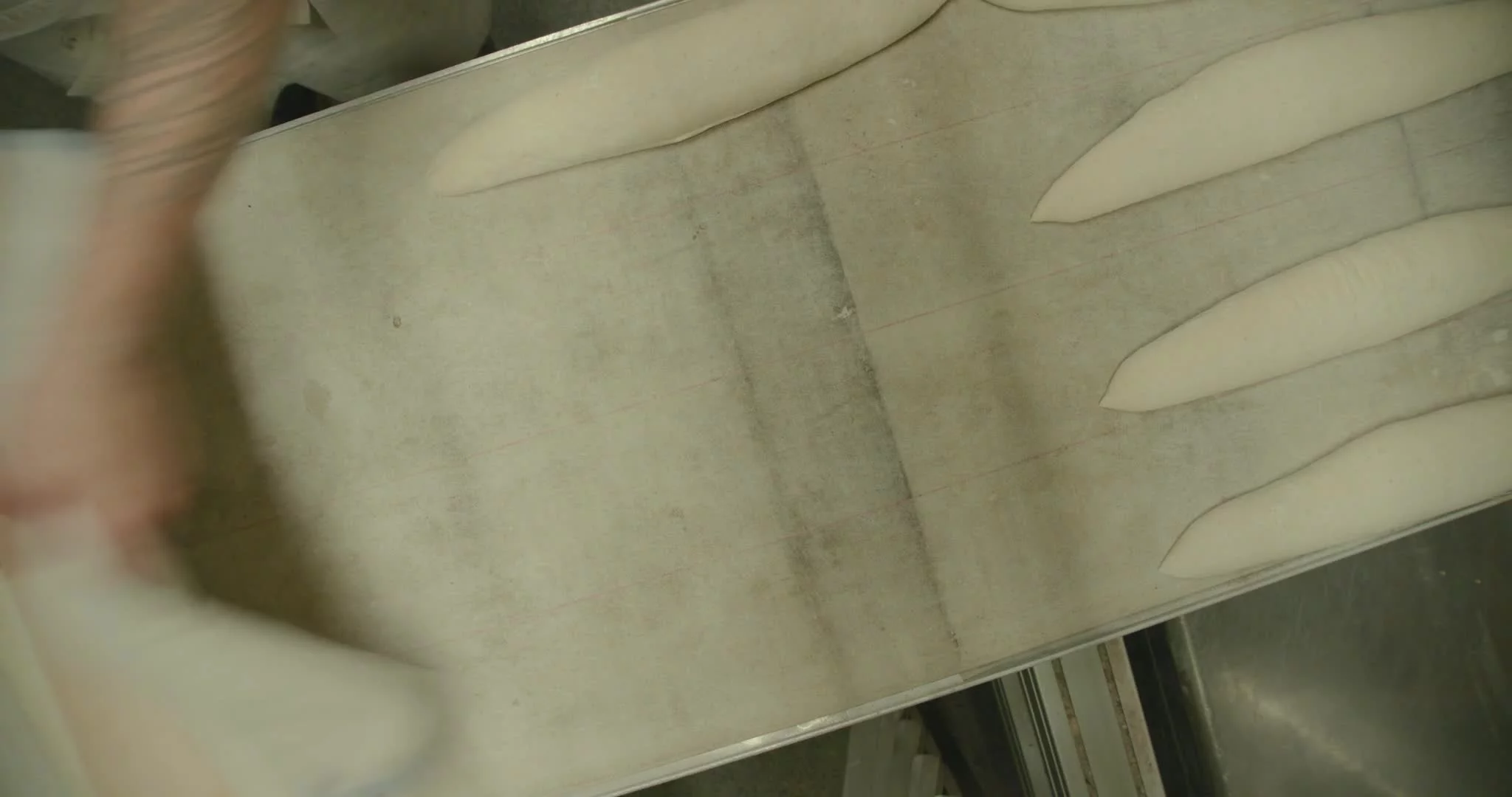
Sprinkle a bit of rice flour onto a baker’s peel. Place the transfer board alongside one baguette and use the couche to gently invert the baguette onto the board. Invert the baguette from the board onto the peel. Use the lame to make 5 even scores, straight down the center line of the baguette, very slightly offset from each other.
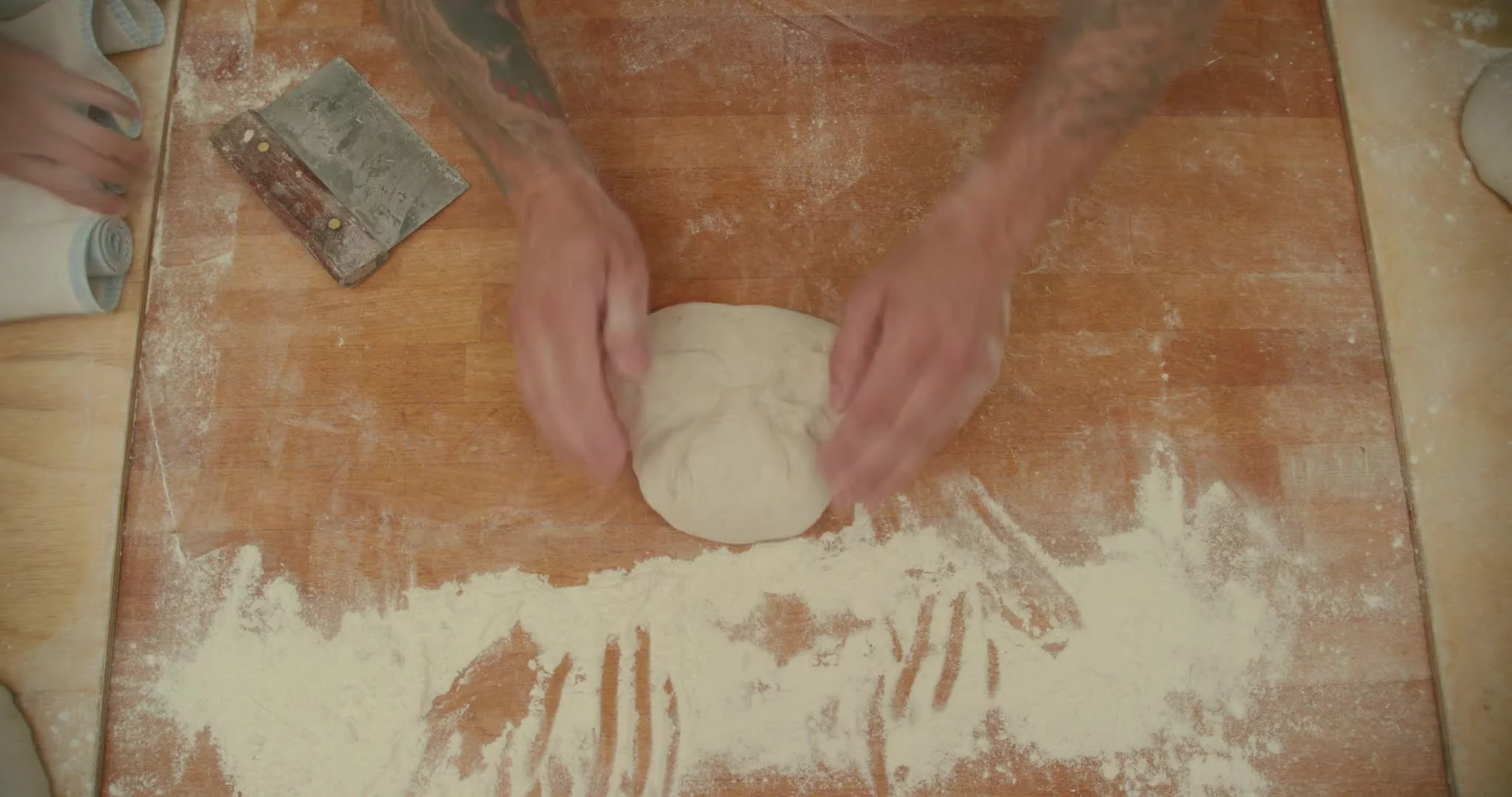
Check for dryness on the surface of the dough. If it has formed a dry skin, mist the surface with water. Use damp hands to gently flatten out a loaf into roughly an 8 × 12-inch / 20 × 30cm rectangle. Working from the long side, pull a strip of the dough toward you and roll it on itself. Seal the resulting seam with the backs of your hands. Then pull that roll toward you, and roll it back over itself, and again seal the seam. The idea is to create a tight cylinder with the dough, which will give it good shape and surface tension as it rests and bakes. Continue pulling and rolling until you have completely rolled the dough into a tight cylinder. Don’t try to lengthen the dough at this point; the goal is only to wrap a cylinder, and lengthening the dough will make it more difficult to flour the seam.
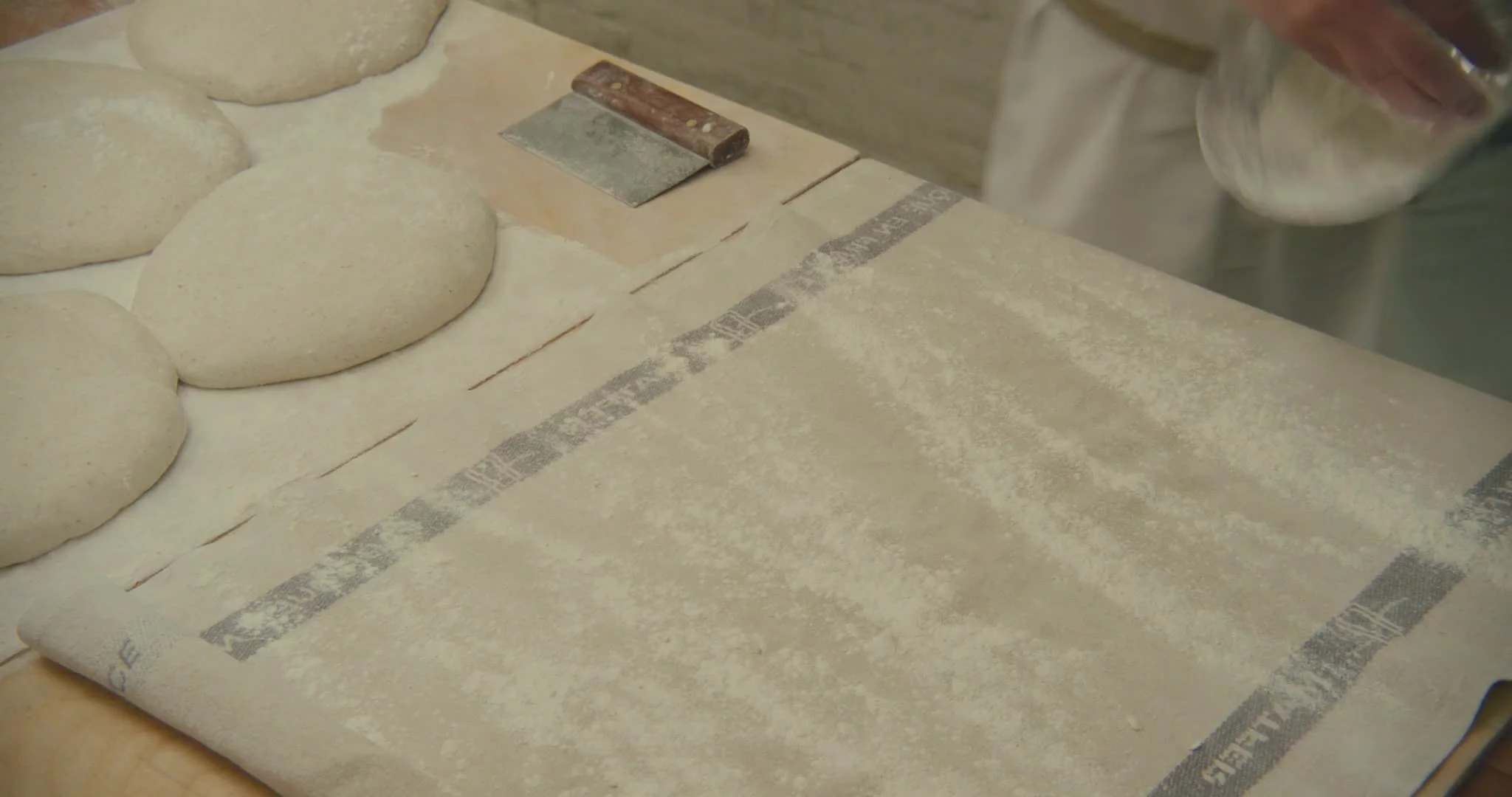
Set up a plate nearby with a well-mixed handful of rice and all-purpose flour. Spread the couche out on a sheet pan or large cutting board and dust it lightly with the flour mixture. If the dough is stuck to the work surface, use the bench scraper to gently ease it away from the table. Flour your nondominant hand, place it atop the baguette, and use the bench scraper to shift it off the table, inverting it into your nondominant hand. Dip the seam in flour, gently return the baguette to the work surface, and then start the rolling process.
Roll the dough all the way toward you, and then all the way back, repeating this process several times, and press- ing down lightly each time to evenly extend and lengthen the baguette. The final length should be 16–18 inches / 40–45 cm. If you like, you may roll the ends into points, using a bit of extra pressure with your fingertips. Once again, dip the seam into the flour mixture and transfer the rolled-out baguette to the couche. Pull up a fold of the couche on either side of the baguette to properly support its shape.
Repeat the final shaping procedures for the remaining 2 baguettes. Let the baguettes rest for 45 minutes to 1 hour, until they have expanded and relaxed a bit.
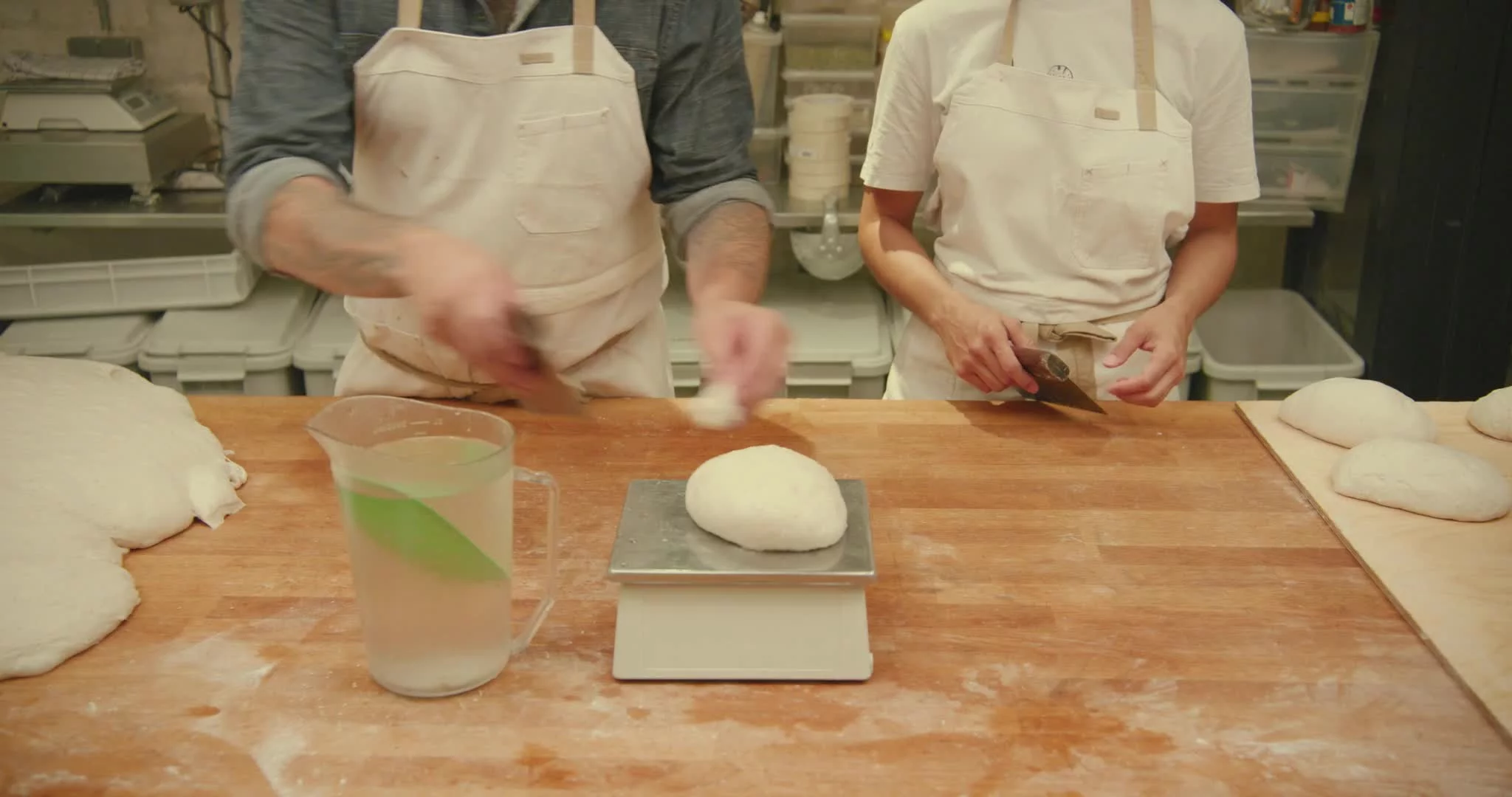
Sprinkle some rice flour onto your clean work surface. Use the flexible plastic scraper to ease the dough out of the bowl. Use the bench scraper to divide the dough into 3 portions of 400g each.
With a wet hand and the bench scraper, preshape each portion into an oval, using swift movements with the scraper and tucking the dough underneath itself with your fingertips. Let the dough rest uncovered for 30 minutes.
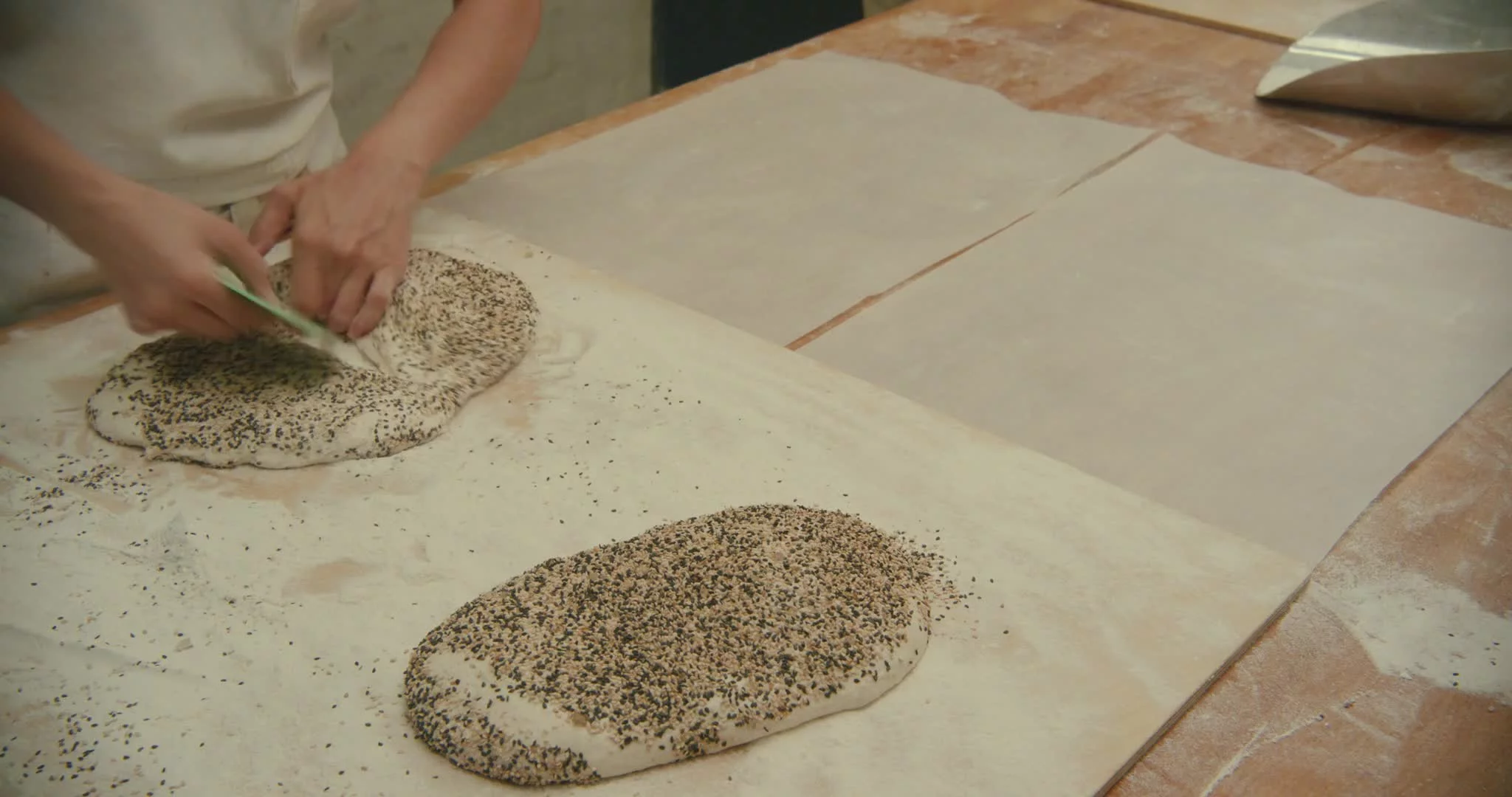
Use a flexible plastic scraper to cut 4 to 6 slits in the dough, angled outward from a center “stem.” The idea traditionally is to make it look like a sheath of wheat, but mine are more free-form. The cuts also create more surface area for browned crust. Stretch out the dough to open each slit as you cut it and make each segment of dough about 2 inches / 5 cm wide and thick.
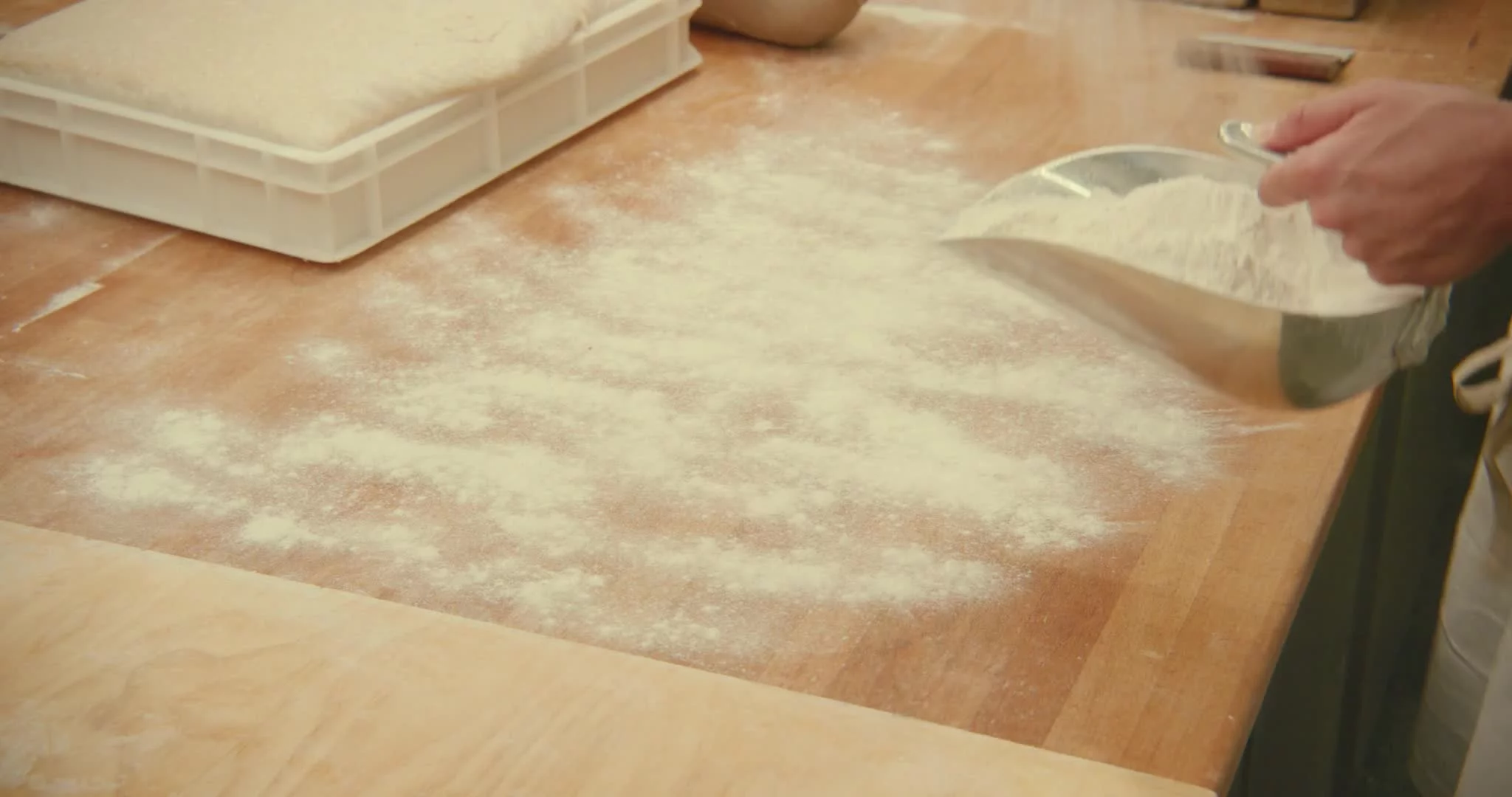
Remove the dough from the fridge, take the lid off the container, and let it come to room temperature. Flour the work surface with a combination of all-purpose and rice flours. Turn the dough out onto the floured work surface and gently press it down with flat hands, to make sure the dough is evenly distributed. Set up a sheet pan nearby, lined with parchment paper, to transfer the buns onto after they are cut.
Distribute your choice of oats and/or seeds evenly over the entire surface of the dough, pressing down gently if necessary to make sure that they adhere. Use the bench scraper to decisively cut the dough into 6 equal pieces of 150g each. Each bun will be a slight rectangle shape. Use the bench scraper to flip each individual bun into your open palm, coating side down to avoid sticking, then swiftly turn each bun, coating side up, onto the prepared sheet pan to rest while you preheat the oven.
There’s no need for a final proof here; once they’re shaped and the oven is hot enough, you can bake them.
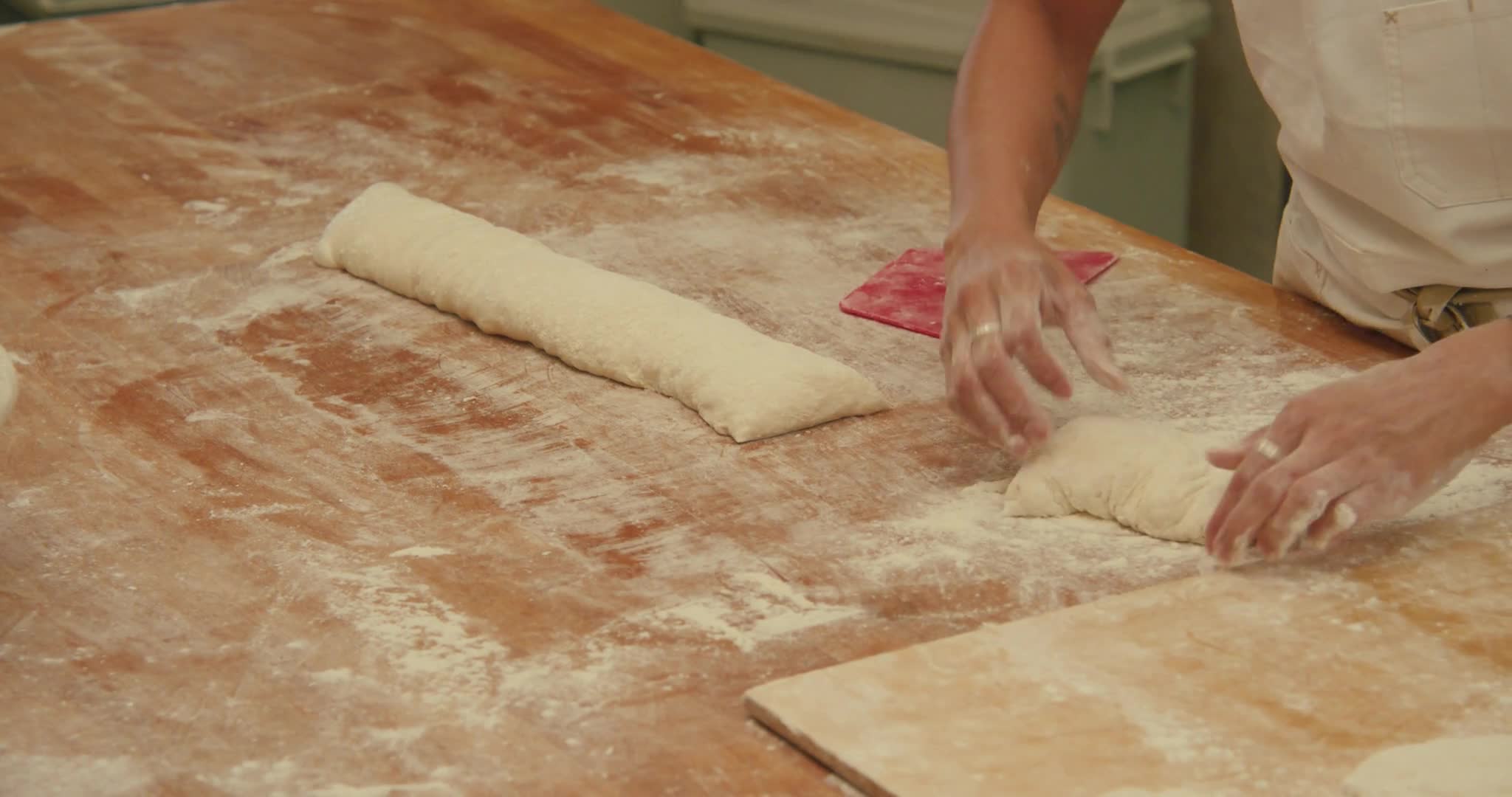
Flour your work surface well and gently flip your dough out onto it. Sprinkle another layer of flour over the top of the dough.
Using your bench scraper, cut the dough into 10 rectangles of roughly the same size. Be as gentle as possible when handling the dough, so you keep as much air encased inside as possible.
Place a sheet pan or shallow roasting pan on the floor of the oven. Arrange a rack in the middle of the oven. Place a pizza stone on the rack. Preheat to 450°F / 230°C.
Keeping the dough on the couche, gently shape both pieces into flat loaves measuring about 12 × 6 inches / 30 × 15cm. Unless you have a huge pizza stone, you will need to bake the loaves one at a time.
Dust a baking peel and a transfer board with rice flour. Gently pull the edges of the couche to flip one loaf onto the transfer board. Invert the loaf onto the peel and transfer it from the peel to the pizza stone. Add about 250ml water to the pan on the oven’s floor, taking care to avoid exposing your skin directly to the resultant steam, which can burn.
Bake the loaf for 20 to 25 minutes, until it has developed a golden brown crust. Remove it from the oven and let it cool on a rack, until cool enough to handle. Repeat with the remaining loaf.