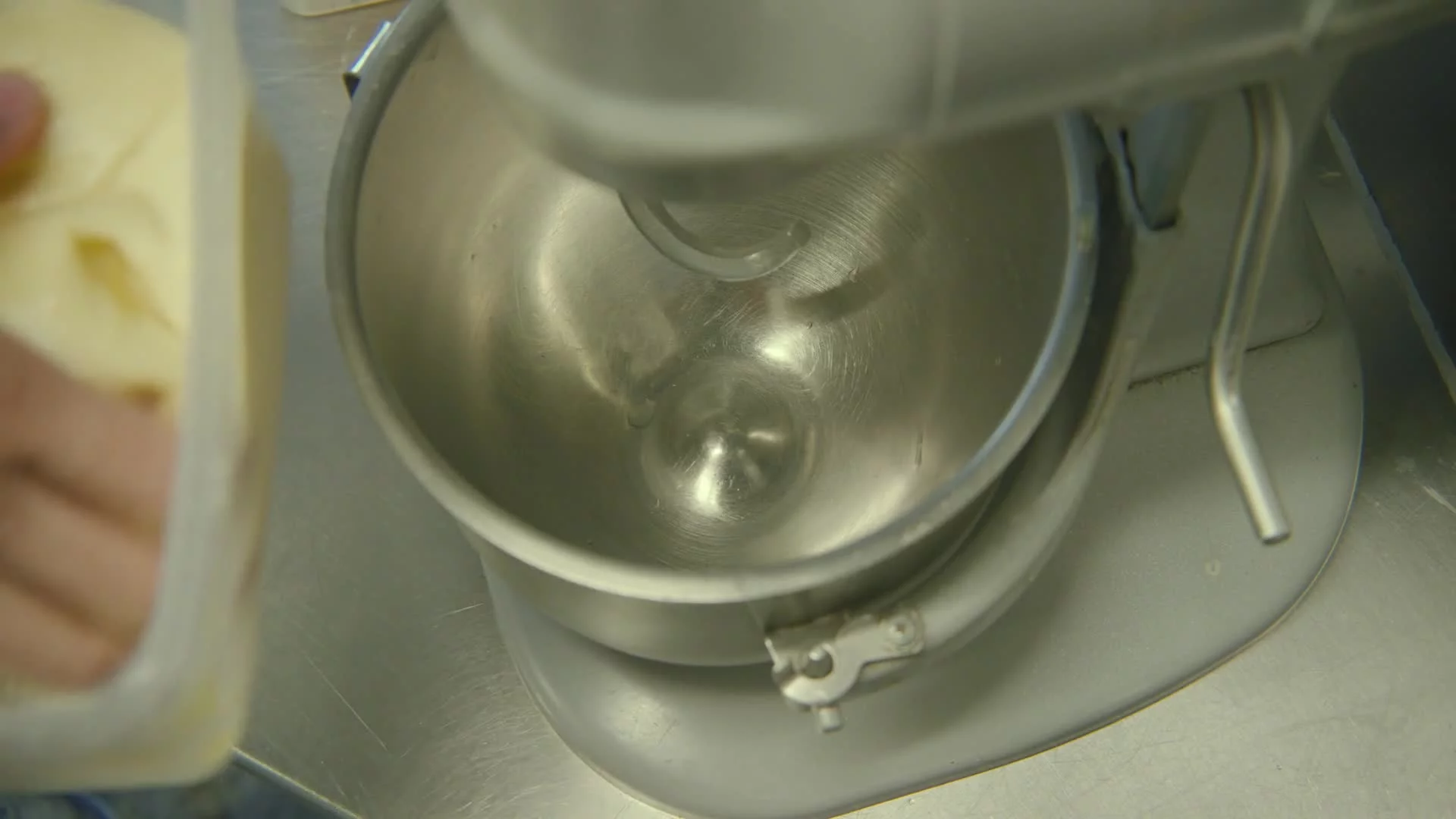
In a stand mixer fitted with the dough hook, combine the first dough and flour and mix on low speed until the mixture just comes together. Increase the speed to medium-high and continue to mix until the dough is strong and smooth, 10 to 15 minutes. You should see and hear the dough slapping against the inside of the bowl as one cohesive mass.
Test the strength of your dough: give it a light tug. You should encounter really strong resistance from the dough, like chewing gum that you’ve chewed all day. If it’s not feeling that strong, mix it more, up to 5 minutes longer, and test it again.
This is when the fear sets in, but you’ve come this far, and you’ve got to persevere. You’re strong, and your dough is now at its strongest point, before you start adding sugar, eggs, and butter. The friction from the mechanical mixing and the heat of the mixer’s motor will start to heat the dough up a bit, but don’t freak out — you’re about to add a lot of cold ingredients.
So add half the sugar and all the salt and continue to mix on medium until the sugar and salt have dissolved and you can no longer feel the crystals when you rub the dough between your fingertips, up to 5 minutes. Add the remaining sugar and continue to mix until you can again no longer feel the sugar crystals, up to another 5 minutes.
Add half the butter, mixing until it has been incorporated and you can no longer see or feel visible butter lumps. Decrease the speed to low to avoid splashing and add half the yolks. Once they have begun to incorporate, increase the speed to medium and mix until they are fully incorporated. Next, add the remaining butter, the citrus paste, zest, and juice and continue to mix until they have been completely incorporated.
Decrease the speed to low again to avoid splashing, add the rest of the yolks, then increase the speed again and continue to mix until they are fully incorporated, up to another 5 minutes. Finally, add the raisins and candied orange and mix on low speed for about 2 minutes, until all the additions are well distributed.
After you’ve added the fruit, the dough won’t feel as strong as it did before: don’t panic. It should be smooth, homogenous, and have some resistance when you tug on it gently.
At this point, the dough is finished. It should look and feel like a wet bread dough.
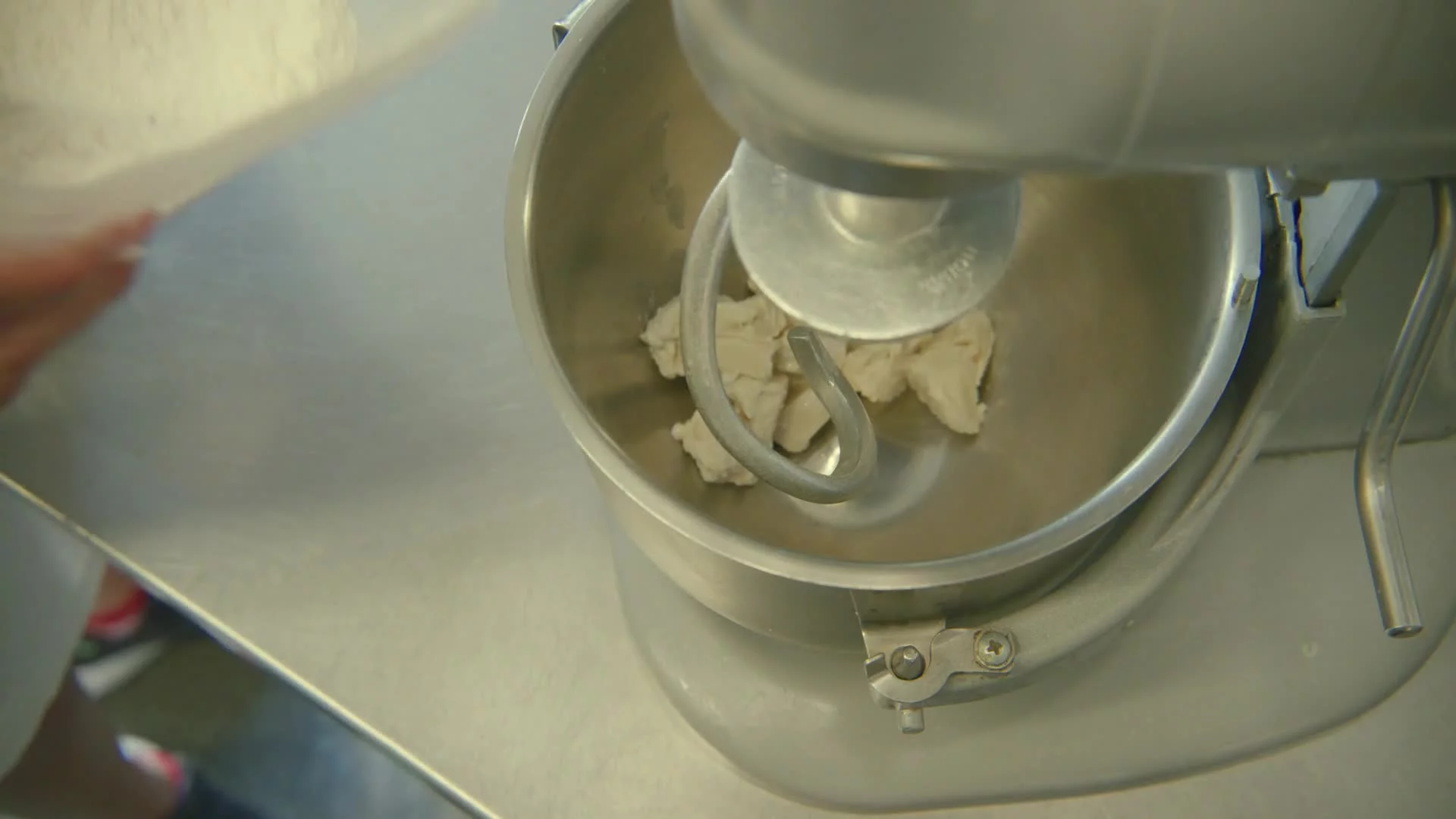
In a stand mixer fitted with the dough hook, combine the flour, water, and Danny and mix on low speed until it just comes together.
Increase the speed to medium, then mix for about 10 minutes. Don’t shortcut this step because you think the dough looks well combined. Test the strength of your dough: give it a light tug. You should encounter really strong resistance, like chewing gum that you’ve chewed all day. If it’s not feeling that strong, mix it more, up to 5 minutes longer, and test it again. The dough does not need to look super smooth before the sugar goes in. It just needs to be very strong.
Add half the sugar and continue to mix on medium speed until the sugar is dissolved and you can no longer feel the sugar crystals when you rub the dough between your fingertips. Add the rest of the sugar and continue to mix until you can again no longer feel the sugar crystals.
Add half the butter and continue to mix until it is almost incorporated. Then add the remaining butter and continue to mix until it is completely incorporated, meaning you can’t see or feel any lumps of butter in the dough.
Decrease the mixer speed to low to avoid splashing and add half the yolks. Once they have begun to mix in, increase the speed to medium and mix until the yolks are incorporated. Decrease the speed to low again, add the rest of the yolks, and continue to mix until the dough is completely smooth and homogenous.
The dough should take about 30 minutes total to mix.
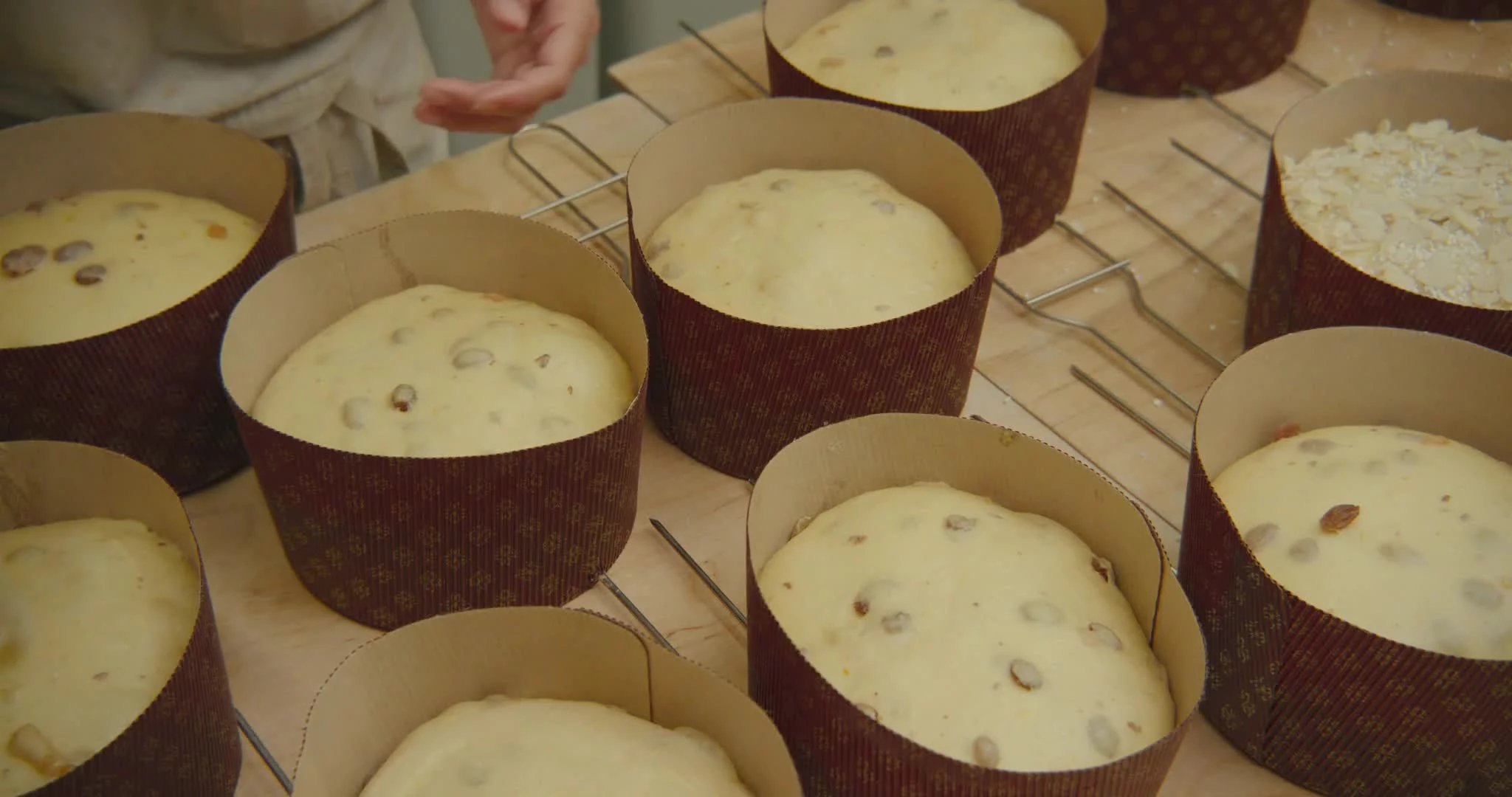
While the oven preheats, mix the ingredients for the topping: In a medium to large bowl, whisk together all the top- ping ingredients until they are well combined. Spoon the mixture over the top of the panettone and use a spatula or pallet knife to gently distribute it over the top.
Don’t worry if some of the mixture drips down the sides. I like to sprinkle the top with pearled sugar and sliced almonds, so if you like, do that, too.
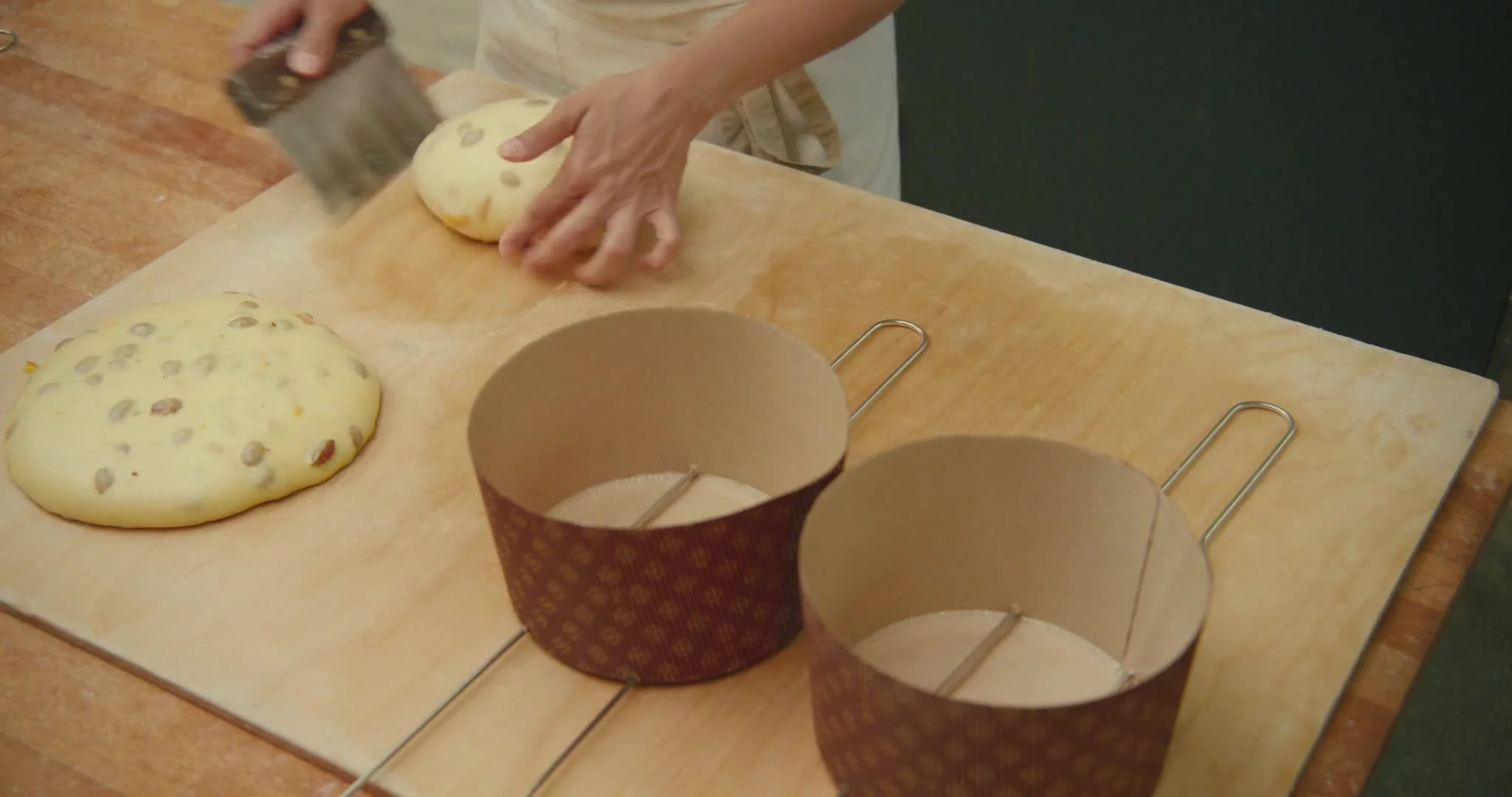
Skewer the panettone mold with 2 parallel wooden skewers, about 3 inches apart, as close to the base of the mold as possible. Give the dough a final shape into a round and gently transfer it, seam side down, to the panettone mold.
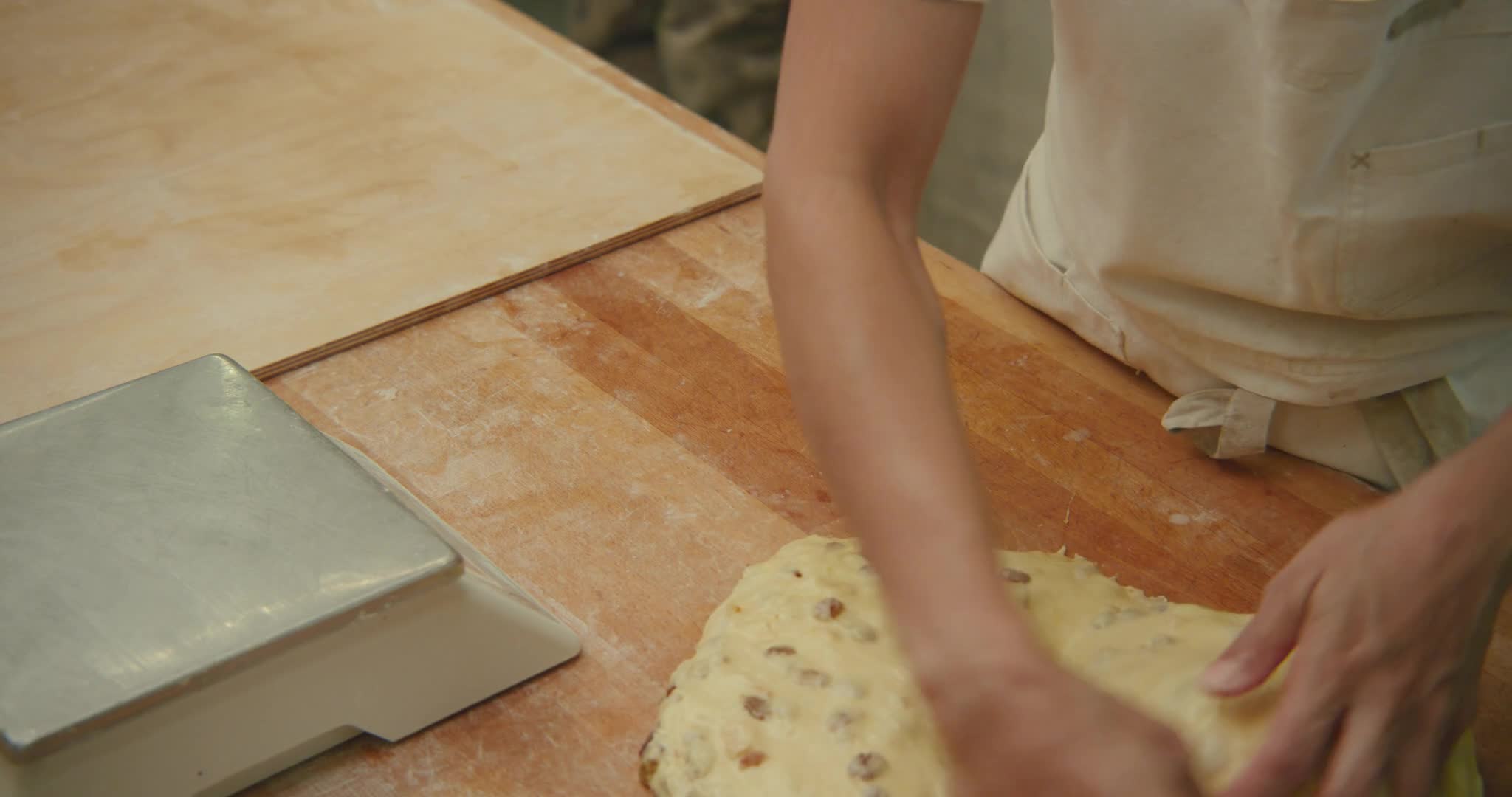
Transfer the dough to a clean work surface and preshape it into a round. Let the preshaped dough rest uncovered for 1 hour, until it has relaxed and formed a skin.