City Loaf Master Recipe - Divide and Preshape
By now, the dough has had 4 hours of bulk fermentation, and if it has been kept at a nice consistent temperature and the room is comfortably warm, it will be well fermented. If you discern that it’s not quite there yet — not too bouncy, no visible bubbling, kind of slack — give it another 30 to 60 minutes.
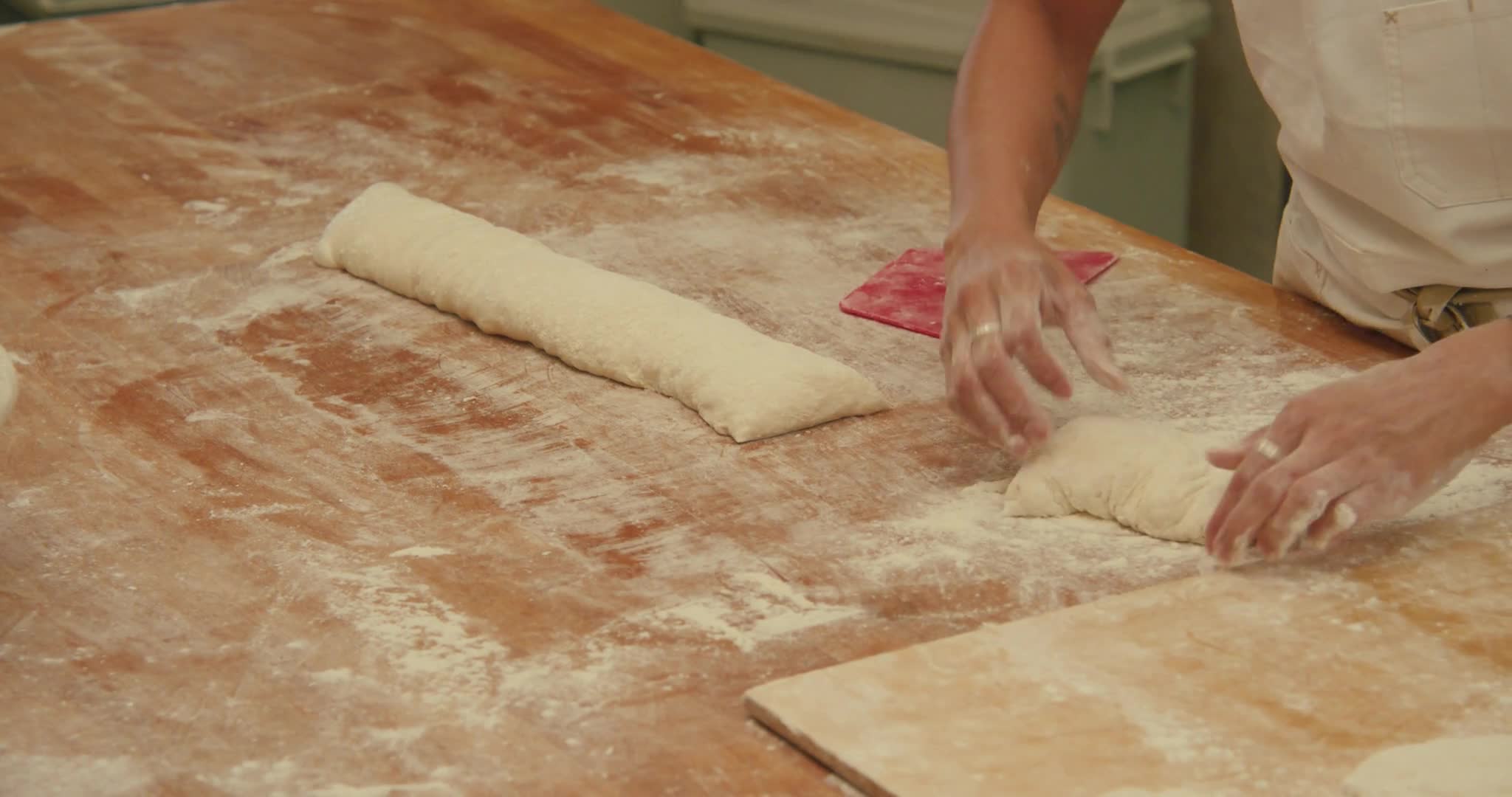
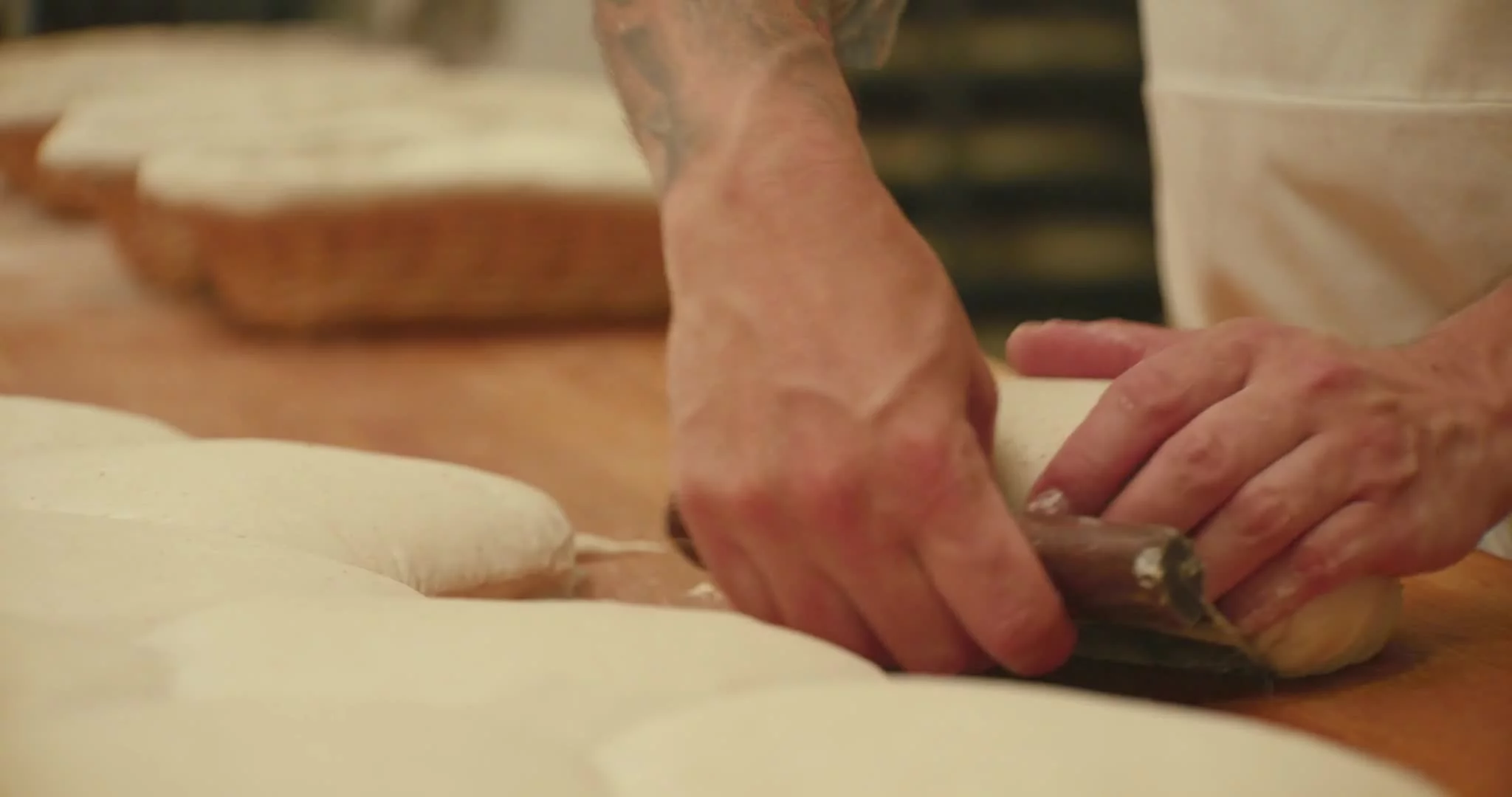
You might be used to flouring the work surface before putting your dough onto it, but trust me, you don’t need to for this style of bread. You actually want the bottom of the dough to stick to the surface, which will help create tension. Gently use your plastic scraper to ease the bread out of the bowl and onto your work surface. Treat it tenderly. You don’t want to de-gas it. Wet your hands to keep them from sticking to the top of the dough. Use your bench scraper to quickly and firmly divide the dough in two. Get one piece directly in front of you. Don’t be afraid to pick it up with your bench scraper and move it to where you need it.
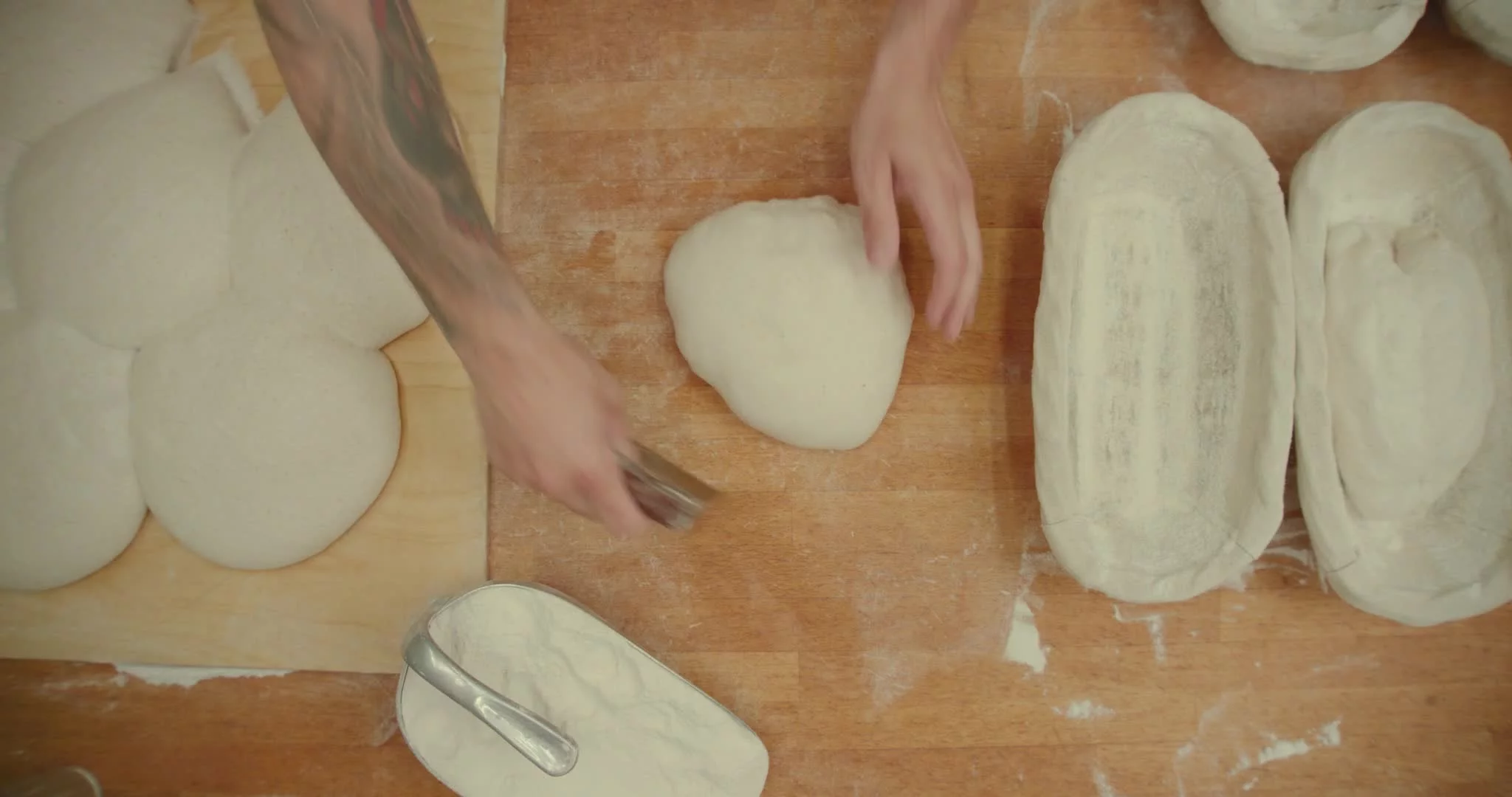
Using your hand and bench scraper in unison, work the dough toward you, using your fingers to swiftly tuck the outer edges of the ball under the surface of the loaf, shaping it into a neat round with good surface tension. Confident, swift movements are best. There will be some sticking, which is why wet hands are essential. Try not to work the dough too much. You don’t want to let out the beautiful gases you’ve spent all this time creating. It takes a lot of practice, but you’ll know when you have it right—it will come together and have a nice tight surface. Repeat with the other piece of dough.